Introduction: AI Is Reshaping the Fundamental Logic of Global Industries
The rise of the AI era is not a simple technological upgrade, but a deep structural transformation of global industries, covering energy systems, information systems, and execution systems.
AI has evolved from a simple “information processing tool” into a core “decision-making and control system for the physical world.” This means that the global industrial system is undergoing structural transformation rather than incremental optimization.
Over the coming decades, a clear and irreversible trend will emerge: healthy economic and industrial systems will continuously evolve toward greater safety, higher efficiency, and stronger flexibility—these will become the unified direction of global industrial development.
1 Evolution Direction of Economic Systems: Safety, Efficiency, and Flexibility
According to long-term patterns of economic evolution, all sustainable and resilient economic systems converge toward three core directions:
1.1 Higher Safety
This includes energy security, supply chain security, and the stability of financial and production systems.In an increasingly uncertain global environment, safety has become the foundational constraint and the primary prerequisite for industrial development.
1.2 Higher Efficiency
The core objective is to reduce unit resource consumption, improve output efficiency per unit, and optimize overall system operating costs.Through automation and intelligent optimization, AI significantly enhances the operational efficiency of global economies and industries.
1.3 Greater Flexibility
This is reflected in rapid response to market changes, dynamic adjustment of production and supply chains, and support for multi-scenario operations.AI’s advanced scheduling and optimization capabilities make real-time economic and industrial adaptation possible at scale.
2 Three Core Systems of the Industrial Structure in the AI Era
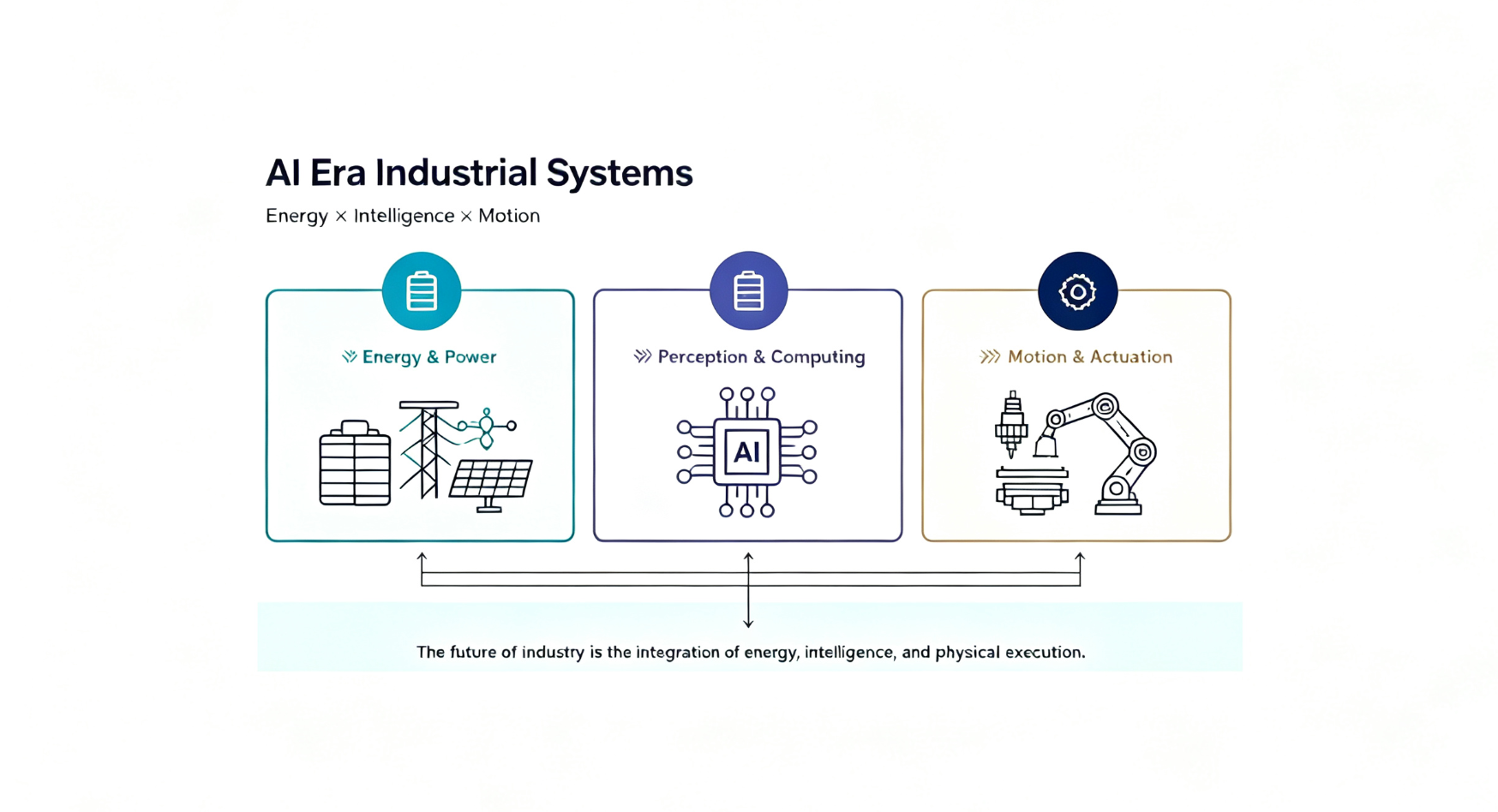
To clearly understand how AI reshapes modern industry, the entire industrial system can be divided into three interconnected core systems:
2.1 Energy and Power System
√ Positioning: The foundational energy layer of all industrial operations
√ Core Functions: Energy storage, energy conversion, and intelligent energy dispatch
√ Core Equipment: Energy storage systems, inverters, high-voltage cables, and intelligent energy dispatch infrastructureThis foundational system determines the long-term stability and scalability of the entire AI-driven industrial ecosystem.
2.2 Sensing and Computing System
√ Positioning: The intelligent decision-making layer of industrial systems
√ Core Functions: Data acquisition, information processing, and AI-driven decision generation
√ Core Equipment: Semiconductor chips, industrial sensors, AI computing platforms, and data centersThis system defines the intelligence level, data processing capability, and control precision of modern industrial systems.
2.3 Motor and Execution System
√ Positioning: The physical execution layer of industrial systems
√ Core Functions: Converting electrical energy into mechanical motion and executing production commands
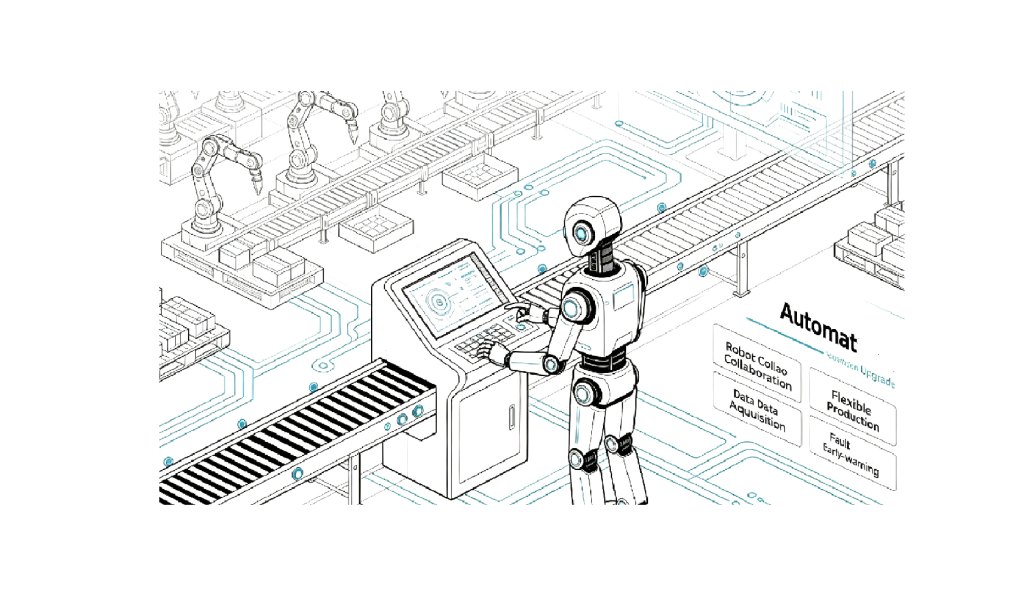
√ Core Equipment: Motor systems, industrial robots, and automated machineryAll AI-generated decisions are ultimately executed through this layer, making it critical for real-world industrial productivity.
3 Energy Crisis and AI Infrastructure: Energy Storage as a Core Foundation
The global industrial system is currently facing structural pressures, including increased volatility in energy supply and demand, accelerating energy transition uncertainty, and rapidly growing electricity demand from AI computing and data centers.
In this context, energy security has been fundamentally redefined. Energy storage systems have become one of the most critical infrastructures of the AI era, addressing three major challenges: unstable energy supply, intermittency of renewable energy, and continuous power demand from AI computing systems.
The energy architecture of the AI era consists of three core components: energy storage systems, power conversion systems, and power transmission and distribution systems.
4 Essence of the AI Era: From the Internet Information Era to the Intelligent Industrial Era
The AI era is an evolution built on the Internet information era, but it fundamentally differs in its core logic and industrial impact.
AI is no longer just a software tool—it is deeply embedded in the control and decision layers of industrial systems.
The integration of AI with mechanical systems enables autonomous decision-making, automated scheduling, and self-optimizing industrial operations.This transformation significantly increases capital efficiency in industrial systems, raising the proportion of automation equipment while reducing dependence on manual operations.
Against the backdrop of rising global labor and coordination costs, along with aging populations, intelligent industrial transformation has become both necessary and urgent.
5 How the Three Core Systems Reshape Global Industry and Society
The deep integration of energy, computing, and execution systems is driving three major structural transformations across global production, energy systems, and social infrastructure.
5.1 Transformation of Industrial Production Models
Traditional labor-intensive manufacturing is rapidly evolving into AI-driven intelligent production systems.Factories are increasingly moving toward autonomous and unmanned operations, significantly improving productivity, efficiency, and product quality.
5.2 Transformation of Energy Systems
Traditional centralized power systems are gradually shifting toward distributed energy networks supported by energy storage and intelligent scheduling.The increasing penetration of renewable energy is making power systems more dynamic, flexible, and intelligent.
5.3 Transformation of Social Operating Systems
Urban infrastructure is becoming fully digitalized, with intelligent upgrades in logistics, transportation, and public services.This is fundamentally improving the efficiency and coordination of modern society.
6 Industrial Competition in the AI Era: From Product Competition to System Capability Competition
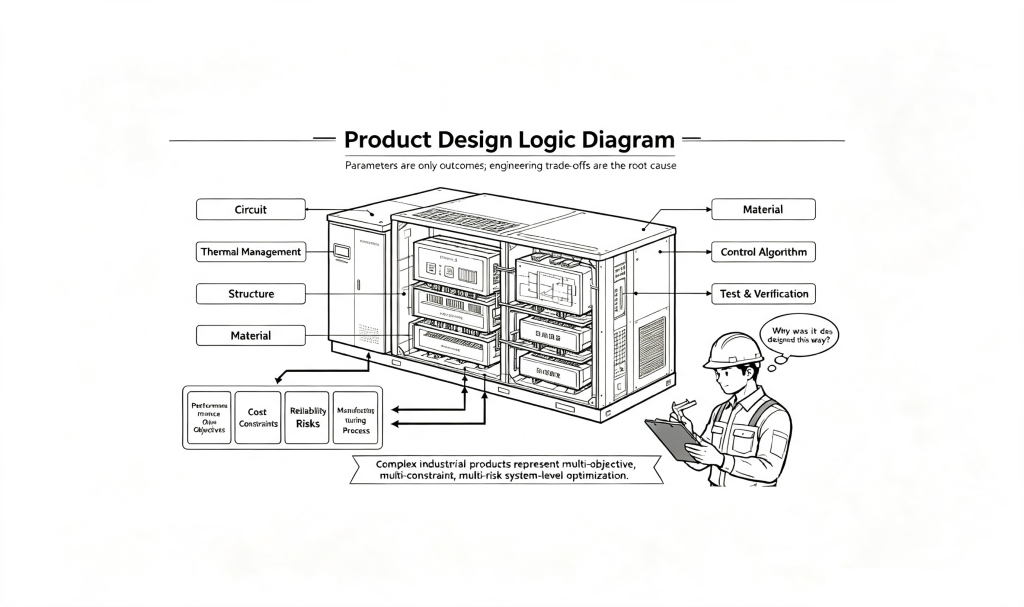
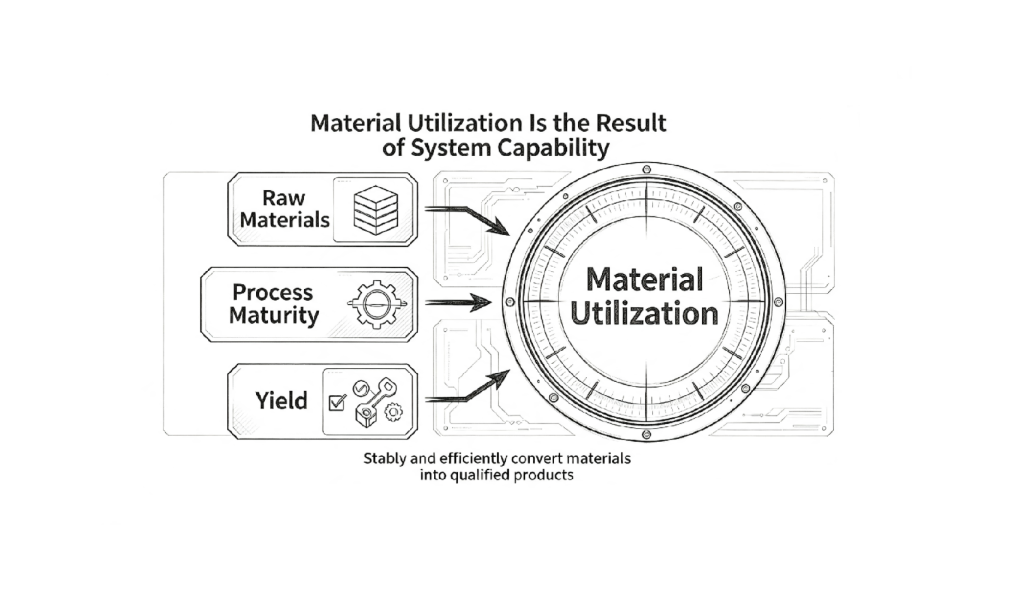
Future industrial competition will no longer be based on individual product advantages, but on integrated system capabilities.Core competitiveness will be defined across four dimensions:
√ Energy system deployment and operational capability
√ AI computing and algorithm development capability
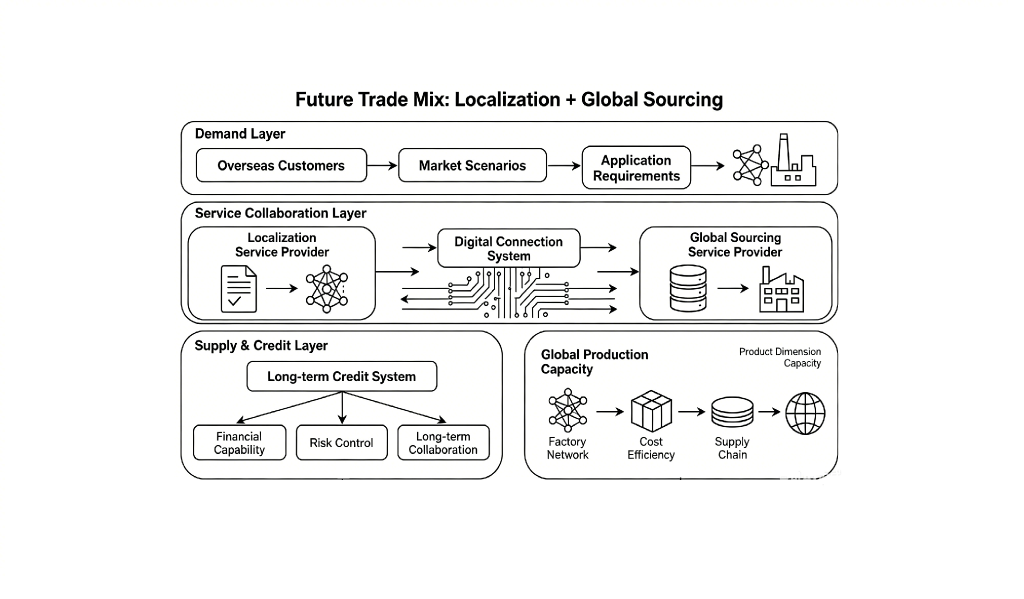
√ Advanced manufacturing and execution capabilityü Global supply chain integration capability
Conclusion: AI-Driven Industrial Transformation Is Already Underway
The global industrial system is being reshaped across three core dimensions:
√ Energy storage is becoming the foundation of industrial infrastructure
√ AI is becoming the core of industrial decision-making
√ Execution systems are becoming the foundation of physical production
Future industrial competition will revolve around energy systems, AI computing systems, and intelligent execution systems.
The integration of these three systems is forming a new global industrial structure.Enterprises and industry participants must actively integrate into the AI-driven industrial system to capture long-term growth opportunities.
Those who understand and adopt this transformation early will gain a decisive advantage in the next industrial cycle and avoid being disrupted by the wave of intelligent transformation.