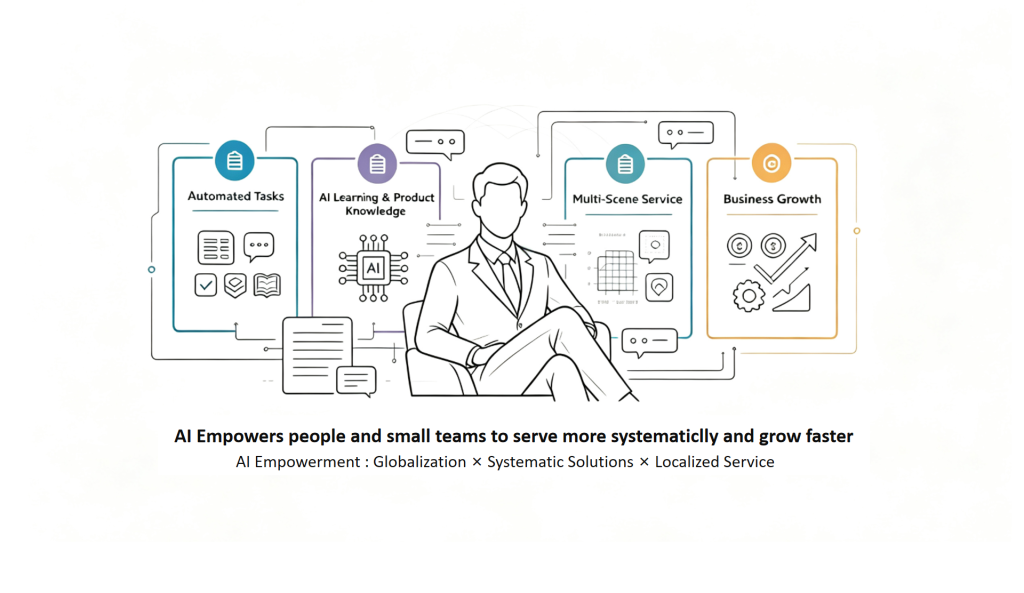
Introduction: The Digital Transformation of Global B2B Has Entered a New Stage
Over the past two decades, the digital transformation of global B2B platforms has essentially gone through a revolution in connection efficiency.
The fundamental value created by traditional international B2B platforms has been solving the most basic challenge:Connecting the world —— making it easier for global buyers to discover suppliers, and enabling suppliers to reach international customers more efficiently.
Therefore, the traditional business logic of B2B platforms has always been clear: Connecting supply and demand → Increasing transaction opportunities → Improving platform activity → Charging suppliers for traffic, advertising, and ranking exposure.
The fundamental revenue model behind this approach is based on charging suppliers for customer acquisition and market exposure, rather than helping buyers make better procurement decisions.Under this business model, the natural incentive for B2B platforms is to continuously attract more suppliers, increase supplier numbers, expand platform participation, and generate more revenue through membership fees, advertising fees, and ranking services. In the early stage of internet development, when global information was highly asymmetric, this model created enormous value.
B2B platforms provided an efficient marketplace that connected global buyers and global manufacturers, reduced information barriers, improved transaction efficiency, and accelerated global value circulation.
However, as global supply chains become increasingly mature and technologies such as artificial intelligence, big data, and supply chain digitalization rapidly develop, the limitations of traditional B2B models are becoming increasingly visible.
One of the most fundamental challenges is: Although the number of suppliers continues to increase, global buyers have not experienced a significant reduction in decision-making time.Instead, buyers still need to spend substantial time and hidden costs determining:
√ Which suppliers are truly reliable
√ What price range is reasonable
√ Which partners are suitable for long-term cooperation.
The problem is not the lack of suppliers.The problem is the lack of intelligent decision support.Therefore, the future competitive advantage of international B2B platforms will no longer simply be:“Helping customers find more suppliers.”Instead, it will become:“Helping customers make faster, more accurate, and lower-risk decisions.”
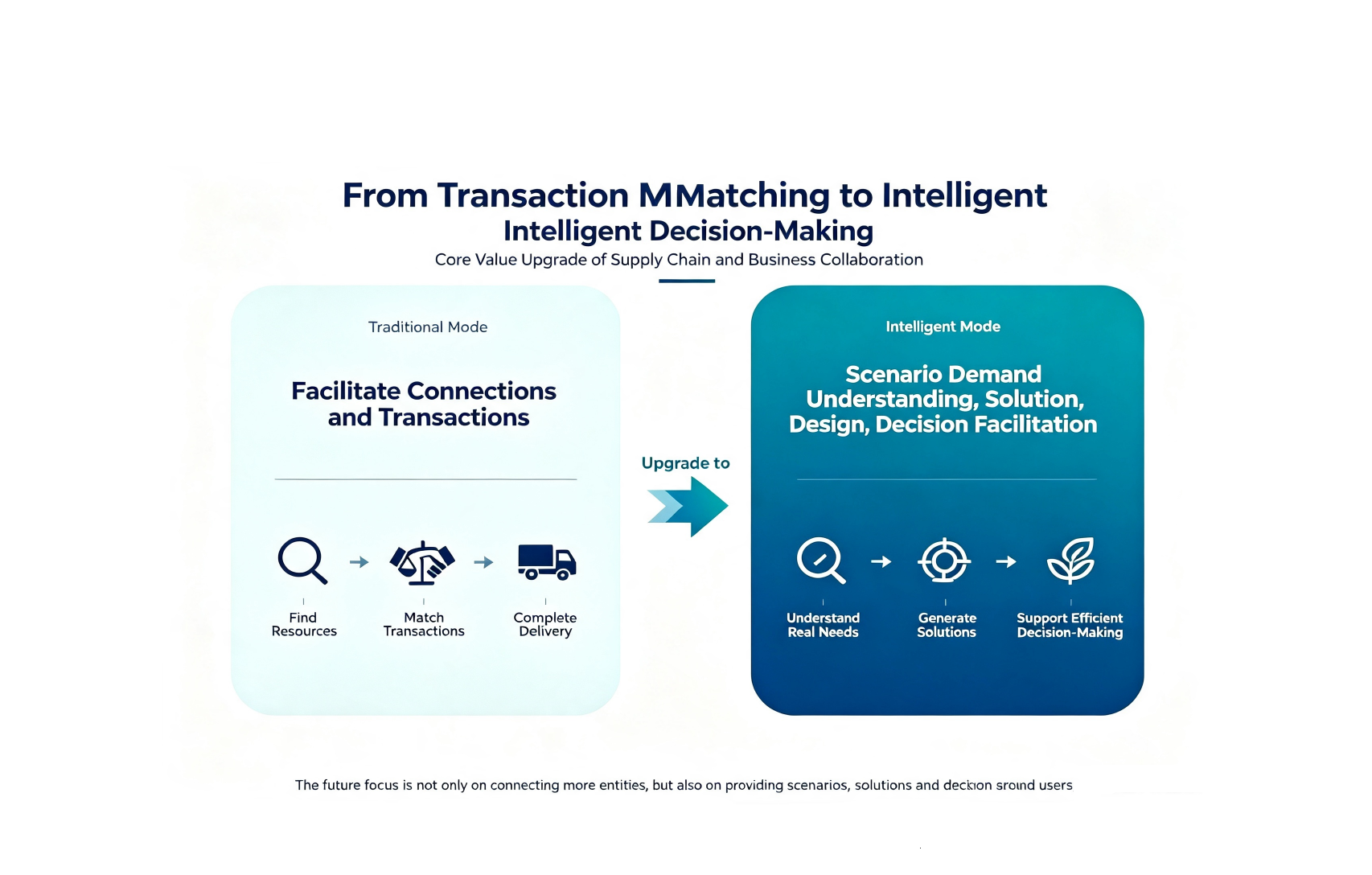
This represents a fundamental transformation of the international B2B business model:
From Making Connections Easier to Making Decisions Smarter
Ⅰ. The Challenge of Traditional B2B Platforms: More Suppliers, But More Difficult Decisions
The greatest strength of traditional B2B platforms is also becoming their biggest future challenge:The massive number of suppliers.
Platforms continuously expand supplier participation because more suppliers create:
√ More product choices
√ More search results
√ More competition
√ More advertising revenue opportunities
The business model itself determines that platforms naturally prefer attracting more suppliers.However, from the perspective of buyers, does having more suppliers always mean better choices?The answer is not necessarily.
For professional procurement customers, what they truly need is not thousands of suppliers.What they need is:
√ Which suppliers truly match their requirements
√ What their actual manufacturing capabilities are
√ Whether the product cost structure and pricing are reasonable
√ Whether delivery capability is stable
√ Where potential quality risks exist
√ What the after-sales structure and service frequency look like
√ Whether a complete after-sales support system exists
√ Whether the supplier can become a reliable long-term partner
However, traditional B2B platforms mainly solve the problem of:“Finding suppliers.” They have not truly solved the deeper challenge:“Selecting the right supplier and helping buyers make better decisions.” As a result, modern procurement processes create new pain points.Buyers spend significant time:
√ Browsing suppliers
√ Sending repeated inquiries
√ Comparing technical specifications
√ Evaluating supplier authenticity
√ Verifying factory capabilities
√ Judging whether pricing is reasonable.
At first glance, platforms appear to improve information circulation efficiency. However, in reality, many hidden costs are transferred back to purchasing companies themselves:
√ Time costs
√ Communication costs
√ Verification costs
√ Trial-and-error costs
The platform improves access to information, but the responsibility of making the right decision remains largely with the buyer.
Customers do not truly need more suppliers; they need better procurement decision solutions that help them quickly identify a reasonable price range and find reliable partners who better understand their application scenarios.
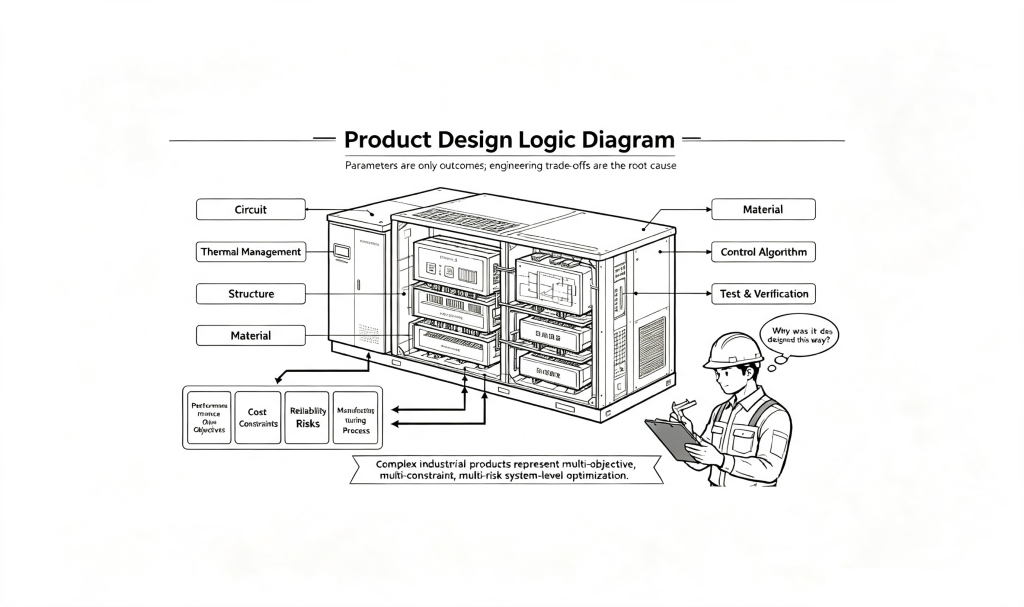
The essence of international procurement is not simply purchasing a product. Especially in the industrial manufacturing sector, a procurement decision often involves multiple critical factors, including technical specifications, application scenarios, supply chain stability, manufacturing processes, quality control, certification requirements, logistics cycles, after-sales capabilities, and cost structures.
For example, when an overseas company purchases energy storage system components, what they truly care about is not “How many battery suppliers can I find?” Instead, they need to understand:
√ What type of solution is suitable for my market?
√ Is this price reasonable?
√ Does this supplier have the capability for long-term and stable delivery?
√ What are the potential maintenance risks over the next three years?
An important factor from the perspective of internal procurement processes and risk management is that procurement teams also need to explain and justify their supplier selection decisions internally. They need to demonstrate that their choice is reasonable, well-founded, and based on a clear decision-making logic.
Therefore, the future competition in B2B procurement will no longer be determined only by information acquisition capabilities, but by supply chain judgment capabilities.
The companies and platforms that can help customers reduce decision-making complexity will create greater commercial value.
Ⅱ. In the AI Era, Supply Chain Data Transparency Will Reshape the Competitive Focus of International B2B
The future value of B2B platforms will no longer be determined only by how much information they can aggregate, but by how effectively they can transform fragmented information into actionable intelligence and better decisions.The development of artificial intelligence will push global supply chains into a new stage ——The era of structured supply chain data.
In the past, many critical supply chain factors were difficult for buyers to accurately understand.For example:
√ The real cost structure of suppliers
√ Raw material price fluctuations
√ Manufacturing processes
√ Production equipment capabilities
√ Actual production capacity
√ Delivery performance
√ Quality records
√ Market price trends
Most of this information previously depended heavily on personal experience, industry knowledge, and long-term professional judgment. A procurement manager often needed many years of industry experience to determine whether a supplier was truly reliable.
However, with the rapid development of AI, big data, and supply chain digitalization, these previously fragmented and difficult-to-access data points will gradually become, structured,analyzable,comparable predictable and solution-oriented.
In the future, supply chain data will not only help buyers understand suppliers, but will also support the creation of:
√ Product design recommendations
√ Manufacturing solutions
√ Delivery strategies
√ Procurement optimization plans
AI will no longer simply answer “Which suppliers are available?” More importantly, AI will answer:
√ Which suppliers are the most suitable?
√ What is the reasonable market price range?
√ Which solutions can satisfy the customer’s requirements?
√ What are the advantages and disadvantages of different solutions?
This transformation will fundamentally reshape the value chain of international B2B. The Next Evolution of International B2B Business Models:
From Traffic Platforms to Decision Intelligence Platforms
The future international B2B platform should not simply become a marketplace where suppliers display products.It should become an AI-powered procurement decision support system.
The traditional model“Suppliers pay for traffic → Platforms provide exposure → Buyers and sellers make decisions independently” will gradually evolve into“Platforms leverage data, AI, and professional expertise → Help customers complete procurement decisions → Create higher-value services → Improve the efficiency of global value circulation”.
The future competitive advantage of B2B platforms will not be determined by how many suppliers they have.It will be determined by How much uncertainty they can remove from global procurement decisions. Future B2B Service Models Powered by AI and Supply Chain Intelligence
(1)AI Supply Chain Advisor
Future B2B platforms will provide intelligent supply chain advisory capabilities.Based on customer requirements, AI systems can automatically analyze:
√ Product specifications
√ Application scenarios
√ Reasonable market price ranges
√ Reference solutions
√ Suitable supplier matching
√ Potential supply chain risks
The goal is not simply to provide a list of suppliers.The goal is to help customers quickly develop an initial supply chain strategy.For example, when a company is looking for energy storage components, the AI system should not only provide battery manufacturers.It should also analyze:
√ Which battery technology is more suitable
√ Which suppliers have the right manufacturing capabilities
√ Whether pricing is reasonable
√ What certification requirements exist
√ What long-term operational risks may appear
The value created is not information delivery.The value created is decision support.
(2)Intelligent Supplier Evaluation and Selection System
In the future, suppliers will no longer simply appear as product pages with basic information. Instead, suppliers will be evaluated dynamically through multiple dimensions, including:
√ Manufacturing capability
√ Historical delivery performance
√ Quality records
√ Technical capabilities
√ Certification systems
√ Industry experience
√ Financial stability
√ Long-term cooperation capability
Customers will no longer need to evaluate suppliers only based on:
√ Marketing materials
√ Product descriptions
√ Sales communication
Instead, they will be able to understand: Which suppliers are truly capable of becoming healthy, reliable, and long-term supply chain partners.The competition among suppliers will also shift.
Previously: Suppliers competed for higher rankings and more visibility.
Future: Suppliers will compete for higher trust scores and stronger cooperation credibility.
(3)Procurement Solution Design Services
The future value of suppliers should not be limited to providing products. Excellent suppliers should participate deeper in the customer's business process, including:
√ Requirement analysis
√ Product optimization
√ Cost control
√ Solution design
√ Supply chain management
√ Delivery coordination
The supplier's role will evolve: From a product seller Into a solution provider and supply chain partner.In complex industrial sectors, customers do not only need a product. They need a complete solution that reduces uncertainty. For example, when purchasing industrial equipment, energy systems, or critical components, customers care not only about what is the product price. They also care about:
√ Will this solution work in my application environment?
√ Can this supplier support long-term operation?
√ Can potential risks be controlled?
√ Can this supply chain remain stable in the future?
Therefore, future B2B value will come from combining:
Products + Data + Expertise + Decision Intelligence + Long-term Service Capability
This is why the next generation of B2B platforms will evolve from Information marketplaces to decision intelligence ecosystems.The winners of the next stage will not necessarily be the platforms with the largest number of suppliers.They will be the platforms that can most effectively help companies answer:
√ What should I buy?
√ Who should I cooperate with?
√ What price is reasonable?
√ What risks should I avoid?
√ How can I build a stable supply chain?
Ⅲ. The Future Competition Among Suppliers: Not Profiting from Information Asymmetry, but Understanding Application Scenarios and Building Global Service Capabilities
For many years, some traditional trading models have relied heavily on information asymmetry to generate profits.There has often been a significant information gap between suppliers and buyers:
√ Buyers do not know the real manufacturing costs
√ Buyers do not know the actual production capabilities of factories
√ Buyers do not know the reasonable market price range
In this environment, some intermediaries could create value simply by controlling information and connecting buyers with suppliers.However, in the AI era, this information gap will continue to narrow. With the development of:
√ Artificial intelligence
√ Supply chain data platforms
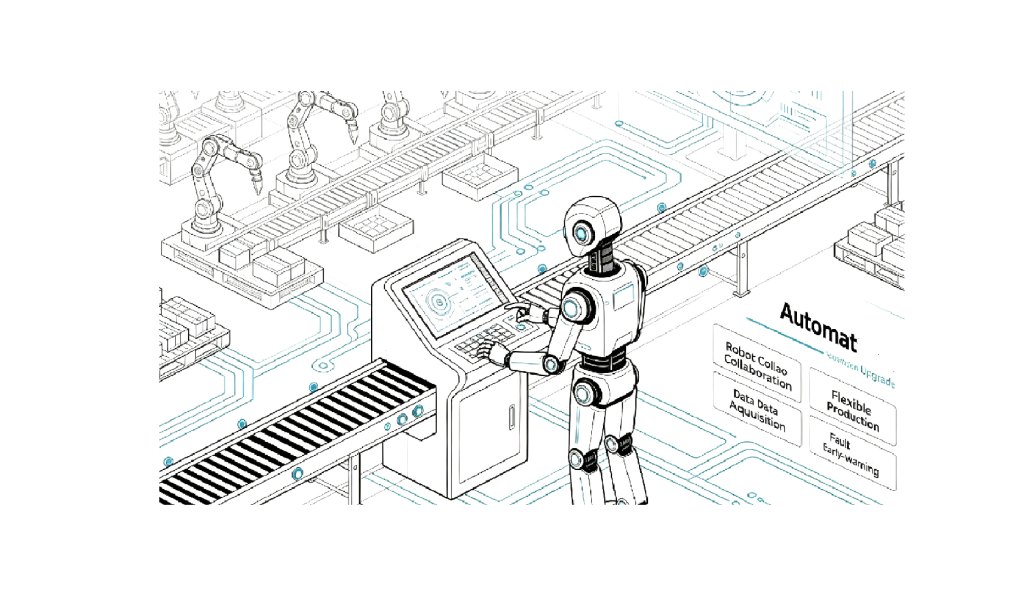
√ Digital manufacturing systems
√ Global market intelligence tools
buyers will increasingly gain the ability to understand:
√ Market pricing
√ Supplier capabilities
√ Manufacturing processes
√ Cost structures
√ Industry benchmarks
Therefore, future businesses will find it increasingly difficult to rely only on:
√ Price opacity
√ Information advantages
√ Simple product reselling
The future competitive advantage of supply chain service providers will come from creating deeper and more sustainable value.The key value creation areas will include:
(1) Designing Product Solutions That Match Customer Application Scenarios
Future suppliers cannot only ask what products do we manufacture.They need to understand what problems are customers trying to solve.A product itself has limited value.The real value comes from whether the product can successfully solve a specific application scenario.
For example, an energy storage solution is not only about battery capacity. It is also related to:
√ Local climate conditions
√ Energy consumption patterns
√ Grid environment
√ Safety requirements
√ Maintenance capability
√ Long-term operating costs
A supplier that understands customer scenarios can provide much greater value than a supplier that only provides a quotation.
(2) Helping Customers Reduce Procurement Risks
Future B2B service providers need to become risk management partners.Their responsibility is not only helping customers purchase products, but also helping customers avoid potential failures.This includes:
√ Supplier qualification risks
√ Product quality risks
√ Delivery risks
√ Compliance risks
√ Long-term supply risks
For global buyers, choosing the wrong supplier can create significant hidden costs:
√ Production delays
√ Market losses
√ Additional logistics costs
√ Customer complaints
√ Brand reputation damage
Therefore, reducing uncertainty itself becomes a valuable service.
(3) Helping Customers Optimize Their Supply Chains
Future supply chain partners should not focus only on individual transactions.They should help customers continuously improve:
√ Procurement efficiency
√ Supplier structure
√ Cost optimization
√ Inventory management
√ Production stability
The goal is not one successful transaction.The goal is building a more efficient and resilient global supply chain system.
(4) Helping Customers Find the Most Suitable Manufacturing Resources
The future B2B ecosystem will not simply connect buyers with suppliers.It will connect buyers with the most suitable manufacturing capabilities.This requires a deeper understanding of:
√ Industry ecosystems
√ Manufacturing regions
√ Technology capabilities
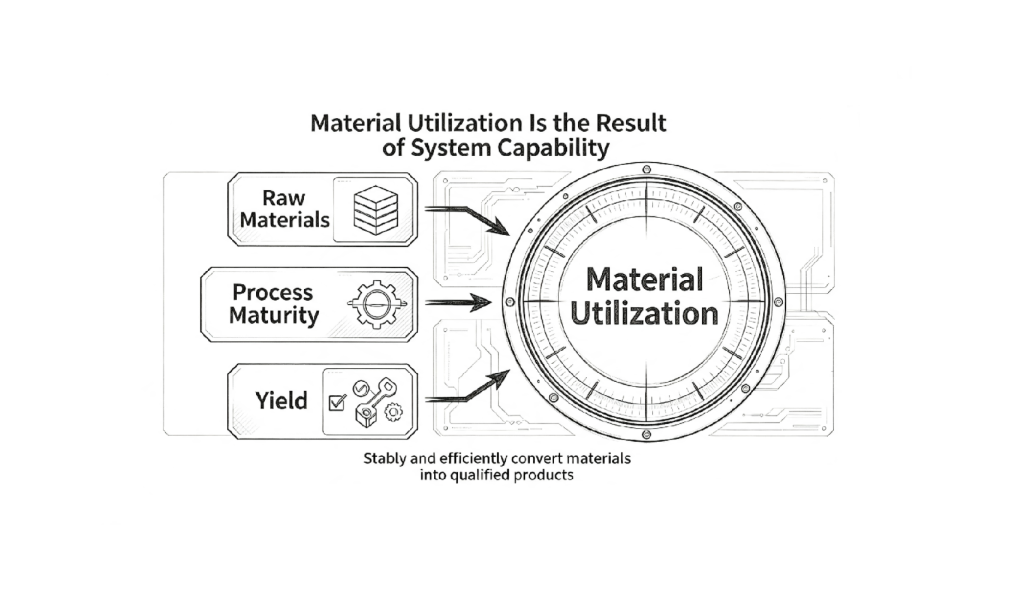
√ Production processes
√ Supplier specialization
The best supplier is not necessarily the largest supplier. The best supplier is the one that matches the customer's specific requirements.The next core value —— Providing Logical Validation and Global After-Sales Risk Control.
An important but often overlooked challenge in international procurement is not only selecting a supplier. It is also proving that the selection decision is reasonable. Especially for professional procurement departments, purchasing decisions often need internal approval. Procurement teams need to explain:
√ Why this supplier was selected
√ Why this price is reasonable
√ Why this solution is suitable
√ Why the cooperation risk is controllable
Therefore, future B2B platforms and supply chain service providers need to provide not only supplier recommendations.They need to provide the underlying logic behind the recommendation. Customers need confidence that:
√ The product choice is rational
√ The supplier selection is justified
√ The price range is reasonable
√ The future risks are manageable
The profit model will shift from earning price differences to creating decision value.In the past, many trading companies generated profits mainly through:
√ Information gaps
√ Price differences
√ Market inefficiencies
However, AI will gradually reduce these traditional advantages. Future profit models will increasingly come from:
√ Reducing customer decision costs
√ Improving procurement efficiency
√ Lowering supply chain risks
√ Providing professional judgment
√ Creating long-term business value
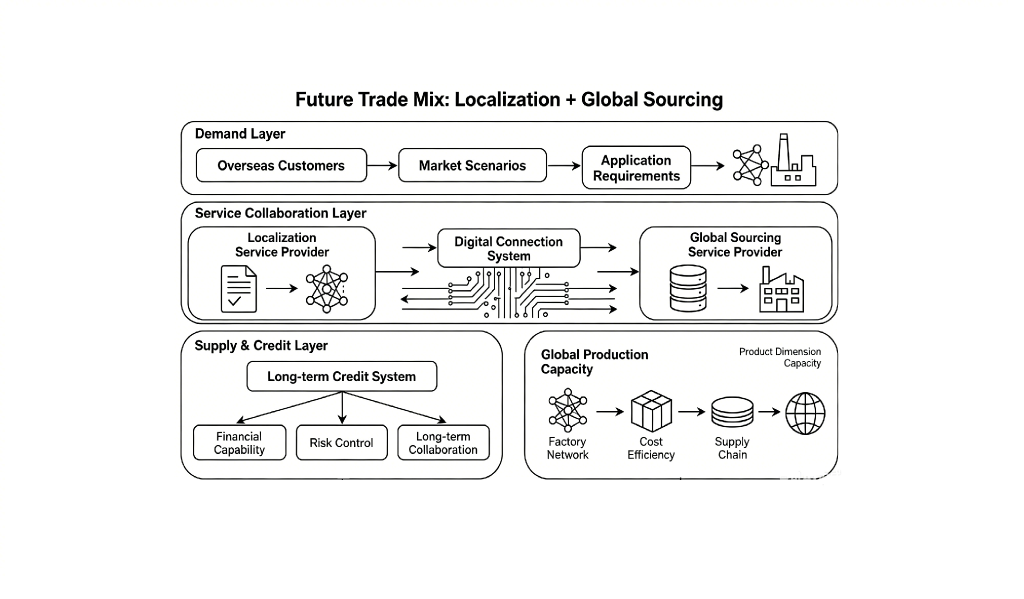
This represents the deeper evolution of international B2B. Among all risks, after-sales service capability is especially important. Global procurement is not completed when the product is shipped.The real challenge begins when products enter the customer's market. Therefore, future global supply chains need stronger cooperation among:
√ Global suppliers
√ Local service providers
√ Regional technical support teams
Through the connection between local service capabilities and global manufacturing resources, companies can achieve two important goals:
First,improve after-sales service speed and customer experience.
Second,reduce the impact of global supply chain fluctuations and minimize unnecessary social costs.
The future global supply chain will not only be built around manufacturing capacity.It will be built around:
Manufacturing capability + Local service capability + Digital intelligence
Conclusion: The Future of AI-Era International B2B Is Making Global Procurement Simpler and More Trustworthy
International trade will not disappear in the AI era.On the contrary, global industrial cooperation will continue to require cross-border supply chains. However, the way transactions happen will fundamentally change.
The next evolution of international B2B is not simply about improving transaction efficiency.It is about Reducing uncertainty in business decisions.A truly valuable supply chain service provider should not only help customers find products. It should help customers quickly identify:
√ The right products
√ The right suppliers
√ The reasonable price range
√ The sustainable long-term cooperation model
This will become one of the most important directions for international B2B business models in the AI era.From connecting the world to understanding the world. From facilitating transactions to enabling better decisions.
The future competition in global supply chains will belong to platforms and service providers that can help enterprises make smarter, faster, and more reliable decisions.
The ultimate value of AI-powered B2B is not simply helping companies find more choices.It is helping companies quickly identify “The reasonable choice”.