Introduction: Why “Local Service Providers + Global Sourcing” Could Become an Important Combination in the Future of B2B International Trade
Over the past decade, the internet has transformed almost every industry. In international trade, one idea has repeatedly gained attention: the internet will eliminate middlemen.According to this logic, the future structure of trade should become increasingly simple:Chinese manufacturers → Global customers.
Manufacturers can use the internet to reach overseas customers directly, while overseas customers can use B2B platforms to find factories directly.As intermediate layers become fewer, transaction costs should theoretically decline.From a theoretical perspective, this appears to be a logical direction.However, based on real-world B2B business practices, I believe the future of international trade will not simply move toward complete disintermediation.
Instead, something else is more likely to happen:Intermediaries that create no value will gradually be eliminated, while service providers that improve efficiency, reduce risk, and create additional value will become increasingly important.
The future competition in international trade may no longer be about who is closest to the customer or who is closest to the factory. Instead, the key question will be:Who can connect customer demand with global production capabilities more efficiently?Under this trend, one combination may become increasingly important:Local Service Providers + Global Sourcing Service Providers.
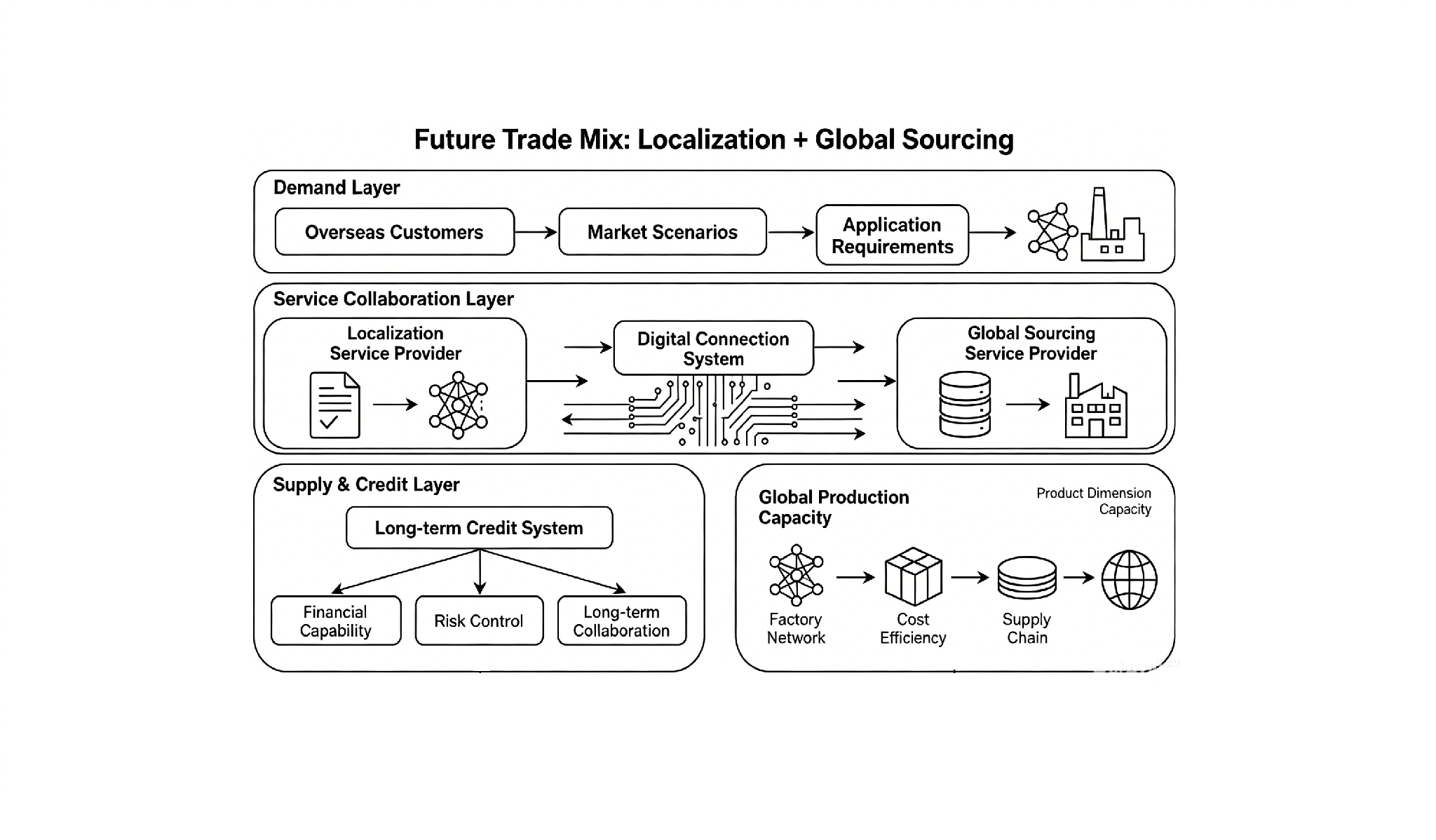
Local service providers are responsible for understanding customers, local markets, and application scenarios.Global sourcing service providers are responsible for understanding supply chains, manufacturers, and production costs.Digital systems connect both sides, while long-term commercial trust can eventually provide the foundation for financial capabilities.
This may become an important organizational model for the next stage of B2B international trade.
1. B2B Platforms Do Not Only Serve Companies — They Serve the “Value Creators” Within Them
To understand the future of B2B international trade, it is important to recognize one fundamental difference between B2B platforms and consumer e-commerce platforms.Consumer e-commerce primarily serves individual consumers.Consumers can usually:
*Search for products
*Compare prices
*Read reviews
*Make payments online
*Wait for delivery
The entire transaction process can be highly standardized.The core value of a consumer platform is to reduce purchasing costs and decision-making costs for consumers.
B2B, however, works differently. A company does not make purchasing decisions by itself.B2B transactions are ultimately driven by people within companies, as well as organizations that provide services around customers.These may include:
*Procurement professionals
*Engineers
*Product managers
*Project managers
*Distributors
*System integrators
*Local industry service providers
*Supply chain service professionals
Therefore, from a practical perspective, a B2B platform does not simply serve “companies.”It actually serves“Professional service providers within companies, as well as B2B organizations that help customers complete procurement, sales, projects, and solution delivery.”
This represents a fundamental difference between B2B platforms and consumer e-commerce platforms.The primary value of a consumer platform is to help consumers purchase products more conveniently.The long-term value of a B2B platform, however, may be to help B2B service providers:Serve more customers, complete more projects, and generate more revenue.
Therefore, future B2B international trade platforms should not focus only on questions such as: “How many products are available?” Or “How many factories are available?”A more important question is:Does the platform make the B2B service providers participating in the ecosystem more capable?
If a platform enables:
*Distributors to expand their product capabilities
*Local service providers to strengthen their supply chain capabilities
*Procurement professionals to improve sourcing efficiency
*System integrators to access more solution resources
Then the value created by that platform goes far beyond simple information matching.
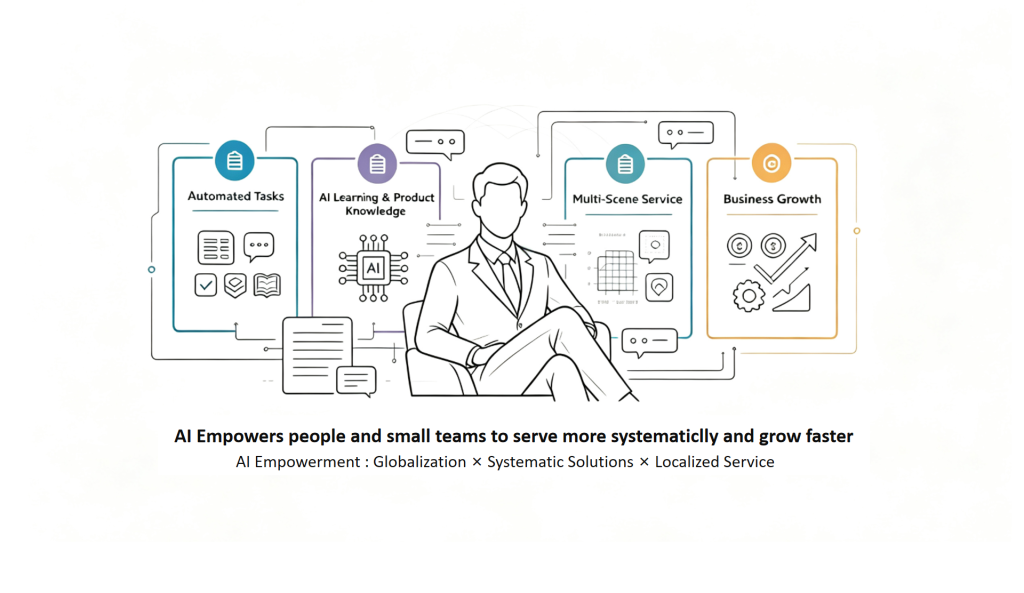
2. Future B2B Service Providers Need Three Core Capabilities to Create More Value and Generate More Revenue
If the future of international trade is not simply about selling products, but about helping B2B service providers create more value, then the key question becomes:How can a B2B service organization continuously expand its capabilities and revenue?
I believe three core elements are required:Organizational Systems + Knowledge Systems + Financial Leverage.
These three capabilities determine whether a company can evolve from an organization that depends heavily on individual resources into a scalable and repeatable business organization.However, the long-term development of local service providers will also depend heavily on their ability to build:
*Training systems
*Organizational capabilities
*Corporate culture
These factors determine whether the organization can continuously develop and reproduce professional capabilities.
2.1 Organizational Systems: Ensuring Capabilities Do Not Depend on One Individual
Traditional international trade is a highly relationship- and individual-driven industry.An experienced trade professional may possess:
*Customer relationships
*Factory relationships
*Product knowledge
*Pricing experience
*Negotiation skills
*Project experience
However, if these capabilities exist only in an individual's mind, it becomes difficult for an organization to scale. When an employee leaves, customer relationships may disappear.When a project ends, valuable experience may not be retained.New employees may then need to start from the beginning.Therefore, future B2B service organizations need to gradually transform individual capabilities into:Organizational capabilities.This may include:
*Standardized sourcing processes
*Supplier evaluation systems
*Project management systems
*Product quotation systems
*Customer service processes
*Quality management systems
The value of software is not simply to increase working speed.More importantly, it can: Institutionalize capabilities that previously depended on individual experience.Once an organization has mature systems, individuals no longer need to start from zero.New employees can inherit the capabilities accumulated by the organization.Therefore, future competition in international trade will, to a large extent, become a competition in organizational efficiency.
Organizations that can standardize, systematize, and digitize more complex trade processes may develop stronger scalability.
3. Knowledge Systems: One of the Most Important Assets in the Future of International Trade
International trade is fundamentally an industry that depends heavily on knowledge and information.A single B2B project may involve:
*Product specifications
*Technical requirements
*Manufacturing capabilities
*Supplier performance
*Product certifications
*Industry standards
*Manufacturing costs
*Product applications
*Local regulations
*Project experience
However, in traditional trade organizations, this knowledge is often highly fragmented.It may exist across:
*Emails
*Excel files
*WhatsApp conversations
*WeChat messages
*Employee computers
*Personal chat histories
*Individual memories
This means that an organization may complete many projects without necessarily accumulating reusable capabilities.Future B2B service organizations that want to remain competitive need to establish their own:Knowledge systems.
These may include:
*Product knowledge bases
*Factory databases
*Supplier evaluation systems
*Industry case libraries
*Project experience databases
*Customer application databases
The development of AI will further reduce the cost of knowledge management and knowledge retrieval.Experience gained from one project can be reused by:
*The next employee
*The next customer
*The next market
*The next project
Therefore, competition among future trade companies may gradually shift from“Who has more customer resources?”to“Who can more effectively transform past experience into future organizational productivity?”
4. Financial Leverage: International Trade Ultimately Competes on Commercial Trust
Organizational systems and knowledge systems can gradually be built and accumulated through software and digital tools.However, the third capability is more difficult to establish:Financial capability.
International trade has never been only about products.It is also about:Commercial trust and credit.For example, a customer may request:90-day payment terms.A factory, however, may require:A deposit when the order is confirmed and full payment before shipment.
This creates a significant financing and cash-flow gap.Who bears that gap?Who has sufficient credit?Who can access financing?These are challenges that future B2B service organizations must address.If a company continuously accumulates:
*Stable customers
*Reliable suppliers
*Strong payment records
*Transparent transaction histories
*Consistent project delivery capabilities
It will gradually build one of the most important commercial assets:Trust and Credit. Once sufficient commercial trust and credit have been established, a company may gain access to:
*Longer payment terms
*Trade finance
*Supply chain finance
*Inventory financing
*Project financing
Therefore, the relationship can be understood as follows:
*Organizational systems improve efficiency.
*Knowledge systems improve professional capabilities.
*Long-term commercial trust ultimately creates financial leverage.
The combination of these three capabilities can help a B2B service organization expand its business on a sustainable basis.
5. Every Market Has Its Own Rules — and Local Service Providers Understand Them Best
One important reality in international trade is often underestimated:The global market is not one single market.Different countries and regions have different:
*Regulations
*Certification requirements
*Business cultures
*Purchasing habits
*Distribution structures
*Payment methods
*Installation standards
*After-sales service expectations
Therefore, a product that succeeds in China cannot necessarily be directly replicated in:
*The United States
*Europe
*Latin America
*The Middle East
*Southeast Asia
The real question is often not“Can the product be manufactured?” Instead, the more important questions are:Why does the customer want to buy it?How can the product enter the local market?Who will handle installation?Who will provide after-sales service?Who truly understands the customer's local needs?
These questions are often not what manufacturers in the production region understand best. Instead, local service providers in the customer's market usually have stronger capabilities in these areas.The value of local service providers is not limited to sales.
They possess:
*Market understanding
*Customer relationships
*Application experience
*Local resources
*Service capabilities
Therefore, working with capable local service providers can significantly reduce:
*Market entry costs
*Communication costs
*Compliance risks
*Misunderstandings of customer requirements
*After-sales service risks
In other words:Local service providers reduce the knowledge and understanding costs associated with entering unfamiliar markets.
6. Local Service Providers Understand Demand — Global Sourcing Understands Supply
This may be one of the most important principles behind the future specialization of international trade.Local service providers in the customer's market generally understand:
*Who the customer is
*Why the customer is buying
*Where the product will be used
*What problems the customer is actually trying to solve
*Which solutions can solve those problems
*Which services can improve customer satisfaction
Their core capability is:Understanding Demand.Global sourcing service providers located close to manufacturing regions or industrial clusters generally understand:
*Which factories truly have manufacturing capabilities
*Which suppliers offer more competitive pricing
*Which factories specialize in different products
*Which industrial clusters have specific advantages
*How to evaluate suppliers
*How to control quality
*How to coordinate production
Their core capability is:Understanding Supply.Demand and supply require fundamentally different types of expertise.Therefore, expecting one organization to simultaneously:
*Deeply understand local customers
*Deeply understand local markets
*Deeply understand global factories
*Deeply understand manufacturing costs
*Deeply manage supply chains
may not always be the most efficient approach,more efficient structure in the future may be:
*Local service providers manage the demand side.
*Global sourcing service providers manage the supply side.
*Manufacturers focus on production.
*Digital systems enable coordination and collaboration.
Specialization does not necessarily create more unnecessary layers in the transaction.Instead, it allows:Each participant to focus on what they do best.
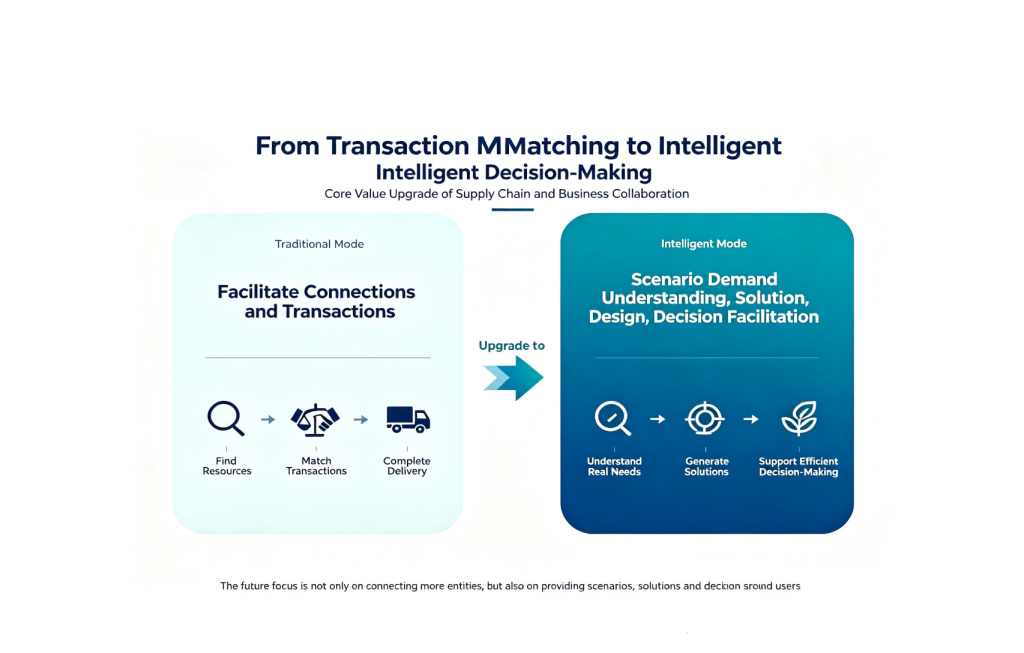
7. International Trade Will Not Eliminate Middlemen — It Will Eliminate Those Who Create No Value
The internet has unquestionably reduced the cost of accessing information.Customers can find factories directly.Factories can also reach customers directly.Therefore, traditional trade models that rely purely on Information asymmetry will become increasingly difficult to sustain.
However, this does not mean that all intermediaries and service providers will disappear.
Those most likely to be eliminated are organizations that cannot:
*Provide professional knowledge
*Reduce transaction costs
*Solve customer problems
*Manage or absorb risks
*Improve supply chain efficiency
Meanwhile, service providers that can create real value may become even more important.For example, if a local service provider can:
*Acquire customers
*Understand application scenarios
*Provide solutions
*Coordinate projects
*Deliver after-sales services
Then the value created goes far beyond simply reselling a product.Similarly, if a professional global sourcing service provider can:
*Identify the right factories
*Evaluate supplier capabilities
*Optimize sourcing costs
*Manage quality
*Coordinate supply chains
Then its value goes far beyond simply introducing a factory.The future of international trade may therefore not simply move toward Disintermediation,but rather toward:The elimination of low-value intermediaries.
8. Digital Systems Will Become the New Infrastructure Connecting Global Professional Capabilities
When:
*Customers are located in one country
*Local service providers operate in another region
*Sourcing teams are located close to manufacturing clusters
*Factories are distributed across multiple cities
Traditional tools such as:
*Email
*Excel
*Phone calls
*WhatsApp
will become increasingly insufficient for managing complex international collaboration.Therefore, the future of international trade will require new digital infrastructure.
This may include:
*Product databases
*Supplier databases
*Knowledge systems
*Project management systems
*AI-assisted communication
*Supplier evaluation systems
*Quotation systems
*Quality tracking systems
The ultimate value of these systems is to enable:Organizations located in different countries to work as if they were part of the same team.Therefore, the most competitive international trade organizations of the future may not necessarily be those with:
*The largest number of employees
*The largest number of factory relationships
Instead, they may be the organizations that are:Most capable of organizing global professional capabilities efficiently.
9. Why “Local Service + Global Sourcing” Could Help the Entire Value Chain Create More Value
Traditional international trade often faces one common problem:Everyone is competing for the same pool of profit. Factories want higher prices.Distributors want lower purchasing costs.Trading companies want larger margins.Customers want lower prices.As a result, everyone is asking:Who can capture more profit?
However, a more efficient international trade system should not simply redistribute the same amount of profit.It should:Create new value and new profit opportunities.Local service providers can generate revenue through:
*Technical services
*Project services
*Installation coordination
*After-sales services
*Customer relationship management
Global sourcing service providers can create value through:
*Factory sourcing
*Supplier evaluation
*Cost optimization
*Product management
*Quality coordination
Manufacturers can benefit through:
*Access to more market opportunities
*Lower overseas market development costs
*More stable orders
Therefore, one of the most important changes in future international trade may be a shift from Competing for margins to Creating more value through specialization.
10. A New Structure for International Trade: Global Supply + Local Intelligence
The future structure of B2B international trade may gradually develop into the following model:Local Service Providers in Customer Markets.Responsible for:
*Customer relationships
*Market understanding
*Product applications
*Solution development
*Project coordination
*Local services
Digital Collaboration Systems is Responsible for:
*Information connectivity
*Product knowledge
*Project management
*Supplier data
*Quality records
*AI-enabled collaboration
Global Sourcing Service Providers in Manufacturing Regions is Responsible for:
*Supplier identification
*Factory evaluation
*Product sourcing
*Cost optimization
*Supply chain coordination
*Quality management
Manufacturers and Industrial Clusters are Responsible for:
*Product development
*Manufacturing
*Production efficiency
*Technology upgrades
This is not simply about adding more layers to international trade.It represents A new model of professional specialization.
Conclusion: The Future of International Trade Is Not About Who Owns the Most Resources — but Who Can Organize Resources Most Effectively
The future of international trade may not move toward complete disintermediation.B2B transactions are not as simple as consumers purchasing standardized products.
Customers need services.Markets need to be understood.Supply chains need to be managed.Factories need to be evaluated.Risks need to be controlled.Capital requires trust and credit.
Therefore, the real question has never been:How can we eliminate all intermediaries?The real question is:How can we eliminate intermediaries that create no value while strengthening service capabilities that create measurable value?
In the future of international trade, local service providers and global sourcing service providers may form increasingly close partnerships.
(1)Local service providers understand:Customers, markets, and applications.
(2) Global sourcing service providers understand:Products, factories, and supply chains.
(3)Digital systems help institutionalize:Organizational capabilities and knowledge capabilities.
(4)Long-term commercial relationships build:Trust, credit, and ultimately financial leverage.
The most competitive international trade organizations of the future may not be those attempting to control the entire value chain.
Instead, they may be the organizations capable of:Enabling professional capabilities across different regions of the world to collaborate efficiently.
Therefore, one important direction for the future of international trade may be:Local Service + Global Sourcing + Digital Knowledge + Commercial TrustIn other words:Local Market Service + Global Supply Capabilities + Digital Knowledge Systems + Long-Term Commercial Trust.
The future of international trade will not eliminate middlemen.What it will eliminate are the intermediaries that cannot help customers:
*Reduce costs
*Improve efficiency
*Control risks
*Create additional value
The future trade service provider will no longer simply be:A person or company that sells products.Instead, it will become:A professional organizer connecting global supply capabilities with local market demand.